There’s something magnetic about the moment just before a scalpel touches skin, the breathless pause when a body exists fully in itself, whole and unbroken, pulsing quietly yet insistently, like a secret refusing to be contained. I keep returning to that thought: how this same body that can be safely opened and stitched in a sterile theater is also the body that could snap, shatter, or be obliterated in a moment outside those walls—on a ladder, on a street corner, by a misstep, by someone else’s hand, by chance itself—and I can’t stop thinking how strange it is that life feels both durable and terrifyingly fragile at the same time. It’s almost like watching a spider cling to a branch in a high wind: it bends, it holds, it survives storms that would sweep away less tenacious creatures, and yet the smallest pressure applied in the wrong place—one careless human step, one gust too sharp—can end it in an instant. Ants can carry objects many times their weight and cross roads full of danger, yet a single careless footfall can crush them. And yet, somehow, they survive. Somehow, we survive.
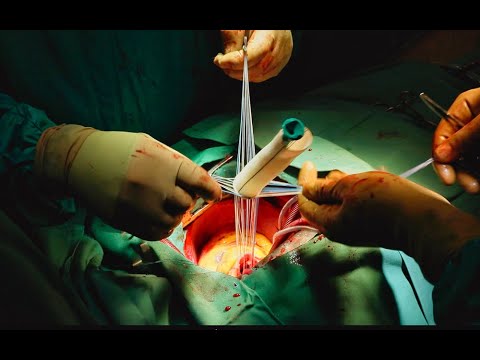
I watched the Bentall Procedure recently, where the aortic root, valve, and part of the ascending aorta are removed and replaced, a process that seems so utterly miraculous that I couldn’t stop thinking about all the ways life is patched together every day without anyone noticing: a pulse kept steady by a doctor, a neuron firing, a heart that somehow doesn’t collapse under its own weight, or under the weight of chaos, of gravity, of all the things that could go wrong. At first, the patient is untouched, the chest rising and falling in that ordinary, miraculous rhythm, the skin intact, the heart hidden but loud, insistent, and completely indifferent to the watching eyes. There’s a quiet holiness there, a reminder that being alive is not heroic or spectacular—it’s just precarious, mundane, miraculous, terrifying, and ordinary all at once. And I find myself thinking: what does it mean to live if everything I love, everything I depend on, is just as exposed to collapse as this heart, as this body, as a spider’s web in the wind or an ant on the sidewalk?
And then the body is opened.

The sternum is sawed. The ribs pulled apart. Layers peeled back to reveal the heart itself, pink and glistening, thumping with a life completely its own, a reminder of how fragile yet insistent life is, and I can’t stop thinking about how absurd it is that something so central, so essential, can be destroyed by a misstep or a moment of cruelty or accident, while in other ways the same body is shockingly resilient. I think about the human hand, the hands that protect and the hands that wound, and the paradox that to survive at all, we are utterly dependent on forces outside ourselves—yet we somehow persist. Levinas’s idea that the face of the Other calls us to responsibility resonates here, but I keep circling back to the question: what does it even mean to be alive when every moment carries the possibility of undoing? How do we live knowing that a single slip, a single wind, a single careless motion can shatter what seems so strong?
Eventually, the heart stops. Tubes go in. Machines take over. Blood flows through metal and plastic, and the body, once entirely self-sufficient, is suspended in a state of mechanical purgatory, dependent on human design and human decision. Watching this, I start thinking about all the ways survival outside the operating room is just as precarious, though far less visible: a child walking near traffic, a bird riding the wind, a spider holding on while the storm rages, a friend who collapses in exhaustion while holding up everyone else, an ant carrying more than its tiny body can bear, yet pressed on until a careless foot falls. And somehow, in the chaos, in all these micro and macro tests of resilience, life goes on. Somehow, there is survival, even when vulnerability is absolute.

In these moments, the body becomes more than anatomy. It becomes a mirror for everything that life asks of us: resilience, patience, vulnerability, acceptance, and awe. Literature has always understood this. Shelley, Poe, and the Gothic writers understood that the body—our fragile, pulsing, mortal body—is a place where terror and beauty coexist, where fascination and dread overlap. In the operating room, I see the same pattern: the body is at once vulnerable and protected, destroyed and repaired, ordinary and miraculous. And I realize, painfully and wonderfully, that this mirrors life itself: the fragility of everything we touch, the delicate equilibrium of all living things, the way a spider or an ant or a person can survive incredible pressures yet be undone by the smallest incident, and that in this tension, life continues.
Watching the heart outside of metaphor is like staring at existence itself: fragile, pulsing, trembling, and yet stubbornly persistent. And I can’t help thinking about the ordinary ways vulnerability plays out every day, from someone dropping a cup, to a ladder wobbling, to a small act of kindness or cruelty. The same body that can be carefully opened in surgery can be crushed in a moment outside. And yet, somehow, the world keeps turning, the heart keeps beating, the spider clings, the ant marches, and we keep living, suspended between fragility and resilience, chaos and care. And maybe that is what it means to be alive: to carry awareness of how easily everything can be undone, while continuing anyway, stubbornly, beautifully, and terrifyingly alive.
